Understanding Your Birth Chart: A Complete Guide
Learn how to read your astrological birth chart and discover what the stars reveal about your personality, relationships, and life path.
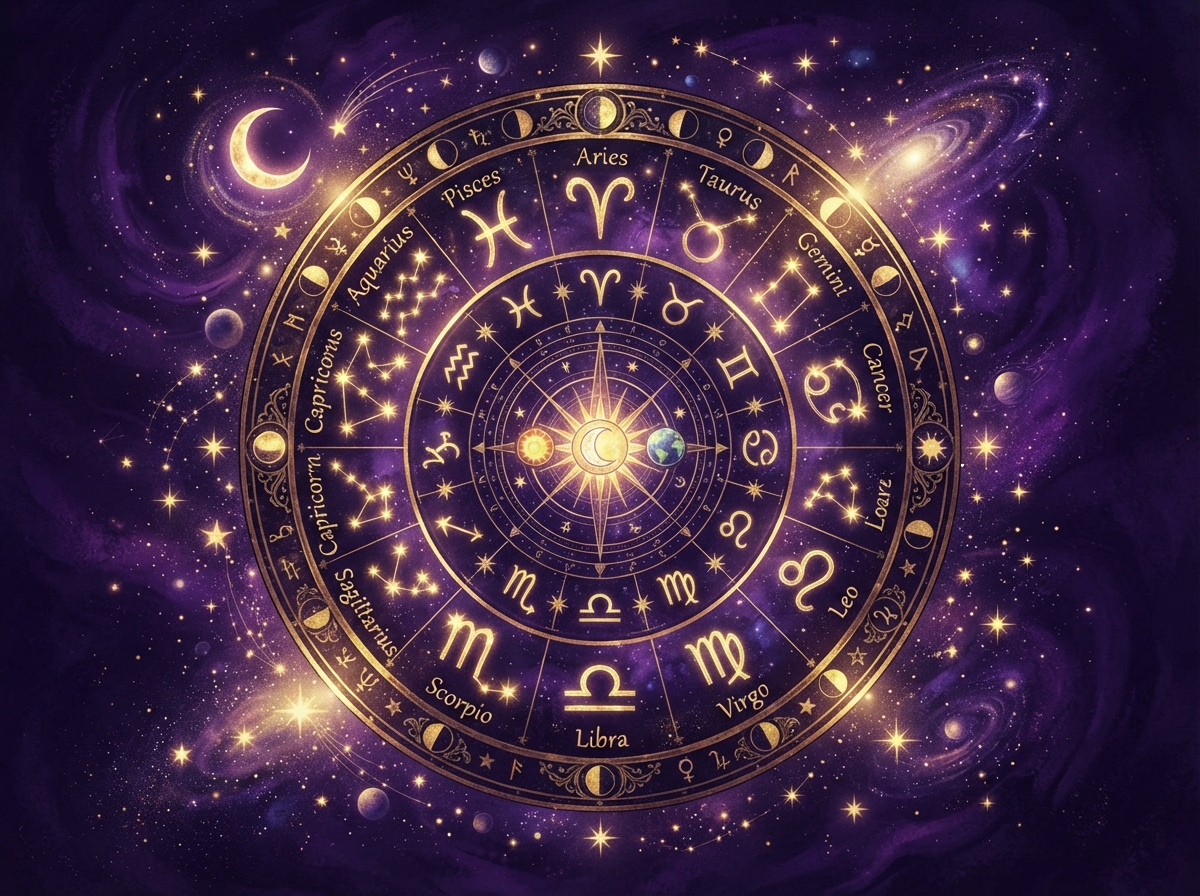
Your birth chart is a snapshot of the sky at the exact moment and location of your birth. It’s far more detailed than your daily horoscope, offering deep insights into your personality, challenges, gifts, and life purpose.
What You Need
To create your birth chart, you’ll need:
- Exact birth date (day, month, year)
- Exact birth time (as precise as possible)
- Birth location (city and country)
If you don’t know your exact birth time, check your birth certificate or ask family members. Even an approximate time is better than none.
The Big Three
Your “Big Three” are the most important placements in your chart:
Sun Sign
Your Sun sign represents your core identity, ego, and life force. This is what most people know as their “zodiac sign.”
Example: A Leo Sun person expresses themselves creatively, seeks recognition, and has natural leadership qualities.
Moon Sign
Your Moon sign reveals your emotional nature, inner world, and subconscious patterns. It shows how you process feelings and what makes you feel secure.
Example: A Cancer Moon person is deeply nurturing, emotionally sensitive, and finds security in home and family.
Rising Sign (Ascendant)
Your Rising sign is the mask you wear in public, your first impressions, and how others initially perceive you. It’s also the lens through which you view the world.
Example: A Libra Rising person comes across as charming, diplomatic, and aesthetically minded.
The Houses
Your chart is divided into 12 houses, each representing different life areas:
- First House: Self, appearance, personality
- Second House: Money, values, possessions
- Third House: Communication, siblings, local travel
- Fourth House: Home, family, roots
- Fifth House: Creativity, romance, children
- Sixth House: Health, work, daily routines
- Seventh House: Partnerships, marriage, contracts
- Eighth House: Transformation, shared resources, intimacy
- Ninth House: Philosophy, travel, higher learning
- Tenth House: Career, public image, authority
- Eleventh House: Friendships, groups, aspirations
- Twelfth House: Spirituality, subconscious, hidden matters
The Planets
Each planet represents different energies and functions:
- Mercury: Communication and thinking
- Venus: Love, beauty, values
- Mars: Action, desire, aggression
- Jupiter: Expansion, luck, philosophy
- Saturn: Structure, discipline, lessons
- Uranus: Innovation, rebellion, sudden change
- Neptune: Dreams, spirituality, illusion
- Pluto: Transformation, power, rebirth
Aspects
Aspects are angles between planets that show how different energies interact:
Conjunction (0°): Planets work together intensely
Trine (120°): Easy, harmonious flow of energy
Square (90°): Tension that creates growth through challenge
Opposition (180°): Balance needed between opposing forces
Reading Your Chart
Start with your Big Three, then explore:
- Which house each planet occupies
- Aspects between your planets
- The overall pattern of your chart
Don’t try to learn everything at once. Astrology is a lifetime study, and your relationship with your chart will evolve as you grow.
Practical Applications
Self-awareness: Understand your natural tendencies and triggers
Relationships: Compare charts to understand compatibility and dynamics
Timing: Use transits to understand current life themes
Career: Identify your natural strengths and ideal work environments
Growth: Recognize challenging aspects as opportunities for development
Resources for Beginners
Free chart calculators:
- Astro.com
- Astro-Seek.com
- Cafe Astrology
Books:
- “The Only Astrology Book You’ll Ever Need” by Joanna Martine Woolfolk
- “Astrology for Yourself” by Demetra George
Apps:
- TimePassages
- The Pattern
- Sanctuary
Remember, your birth chart is a tool for self-understanding, not a fixed destiny. You always have free will to grow beyond any placement.